

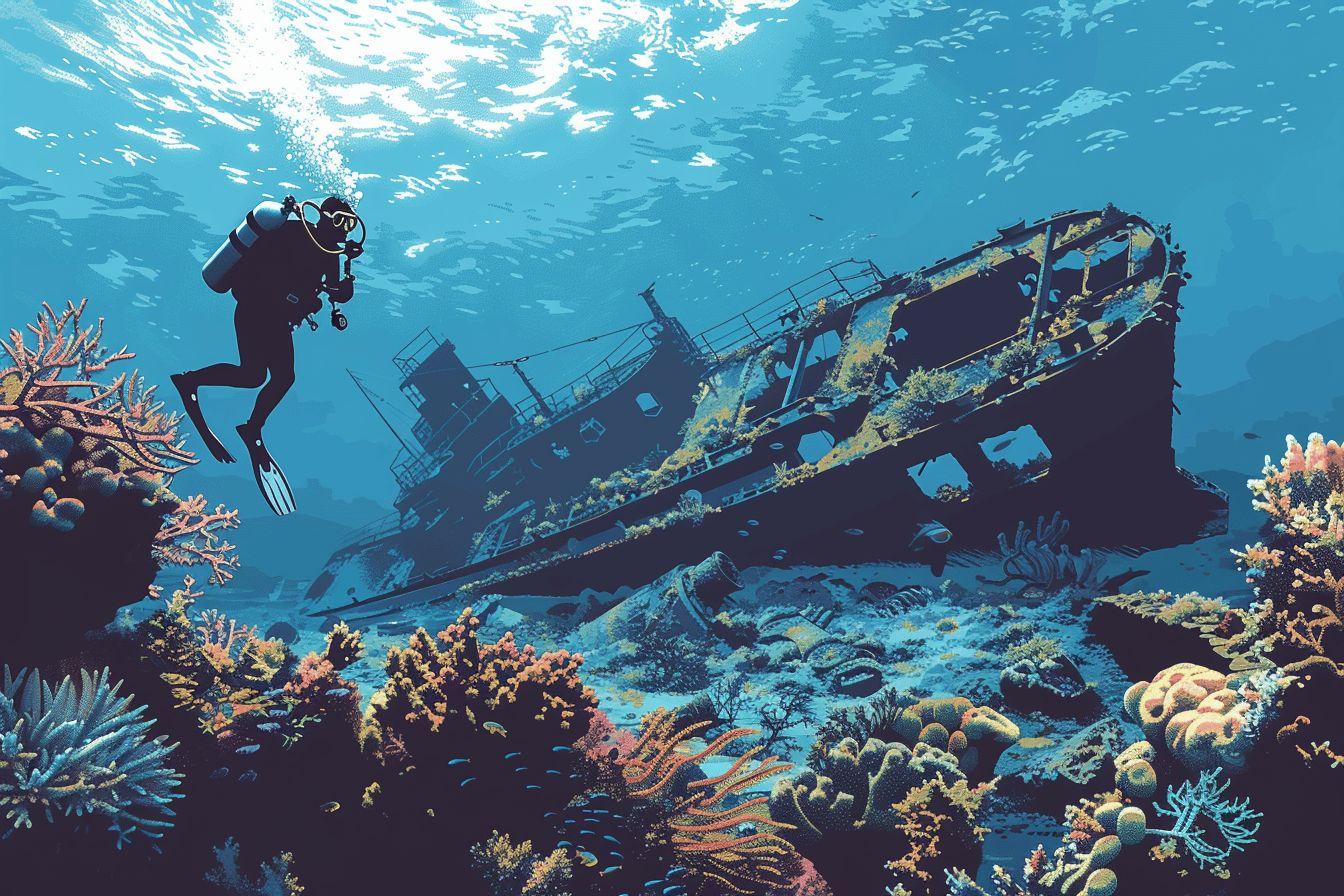
With its 5,853 kilometers of coastline dotted with coves, bays, and cliffs, mainland France offers a true playground for enthusiasts of scuba diving and maritime history. Among the 6,000 shipwrecks listed, some tell us moving and captivating stories, inviting adventurers to dive into the depths to discover these submerged treasures. Here is a selection of five fascinating wrecks to explore along the French shores, where each dive is a true adventure at the heart of history.
The French coasts, with their 5,853 kilometers of coastline, coves, and bays, harbor a multitude of submerged treasures and fascinating wrecks. Whether you are an experienced diver looking for adventure or a curious individual eager to discover maritime tales, these five wrecks are must-sees to explore in the depths of the seas. Each carefully preserved, they recount stories from a bygone era and have transformed into refuges for marine life. Prepare for an immersive journey into the depths of the oceans, uncovering these remnants of another time.
The USS Susan B. Anthony
Where? Port-en-Bessin-Huppain (14).
Its story
This passenger ship of the Grace Line, requisitioned in 1942 by the US Navy, was renamed in honor of the women’s rights activist. As it approached Omaha Beach on June 7, 1944, it hit a mine and sank, but thanks to a well-orchestrated evacuation, the crew managed to escape.
The dive
Divers can take pride in exploring the well-preserved bow of the ship, where a defensive cannon and two cargo masts attract a variety of crustaceans and fish. The damaged stern also offers a fascinating glimpse into military history.
The Laplace
Where? Off Fort-La-Latte (22).
Its story
This American escort ship, gifted to France in 1947, ran aground after hitting a German mine during a tragic night in September 1950. Its sinking has left a mark in the maritime history of France.
The dive
Resting between 15 and 25 meters deep, the mangled wreck offers a fabulous playground for beginner divers. The remains of the wreck, colonized by various marine species, are a habitat for blennies and other underwater inhabitants, and its propellers and rudder remain remarkably intact.
The Africa
Where? 23 miles from Les Sables d’Olonne (85).
Its story
The French passenger ship, measuring 119 meters long, sank during a storm in January 1920, with tragic consequences: only 34 survivors among 602 passengers. This wreck was only discovered in the 1980s.
The dive
For experienced divers, this wreck rests at a depth of 48 meters. Its well-preserved bow and visible boilers testify to the enormity of the disaster, and the marine life thriving there makes each dive new and exciting.
The Dalton
Where? Marseille (13).
Its story
Built in 1877, this English cargo ship was lost with its load of ore during a foggy night in February 1928. This wreck has echoed in Marseille, recounting the challenges of navigating in difficult weather conditions.
The dive
At a depth of 33 meters, divers can explore well-preserved parts of the wreck such as the propeller and rudder, while appreciating the marine diversity that has taken refuge within its structures.
The France
Where? Annecy (74).
Its story
Commissioned in 1909, this paddle steamer served on Lake Annecy until 1965, before sinking under mysterious conditions in March 1971. Suspicions of insurance fraud also surround its disappearance.
The dive
Divers can venture between mid-April and late October to discover this wreck lying at a depth of 42 meters. Exploring its deck and lounges, adorned with period objects, offers a unique immersion into maritime history. Visibility is generally good, making the dive accessible.
Our tips
- Do not enter a wreck if you are claustrophobic.
- Never leave your buddy.
- Always keep an eye on an exit point.
- Do not dive if you do not master your buoyancy; stirred sediments can quickly turn the wreck into a dark cave.
- In the corners of a passenger ship, dive with a thread of Ariadne and two lights.
- Do not touch anything: every piece of metal can be sharp. Check the validity of your tetanus vaccination.


